 MEDALS
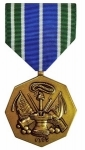
Army Achievement Medal (PHASE ONE)
Criteria: Awarded for outstanding achievement or meritorious service not of a nature that would otherwise warrant awarding the Commendation Medal. Since the Army Achievement Medal is designated as an award solely for junior personnel, it is generally only awarded to officers in the pay grade of O-4 and below and enlisted personnel below the grade of E-7. Award authority rests with local commanders, granting a broad discretion of when and for what action the Achievement Medal may be awarded. The Army Achievement Medal may be awarded in a combat area, but for non-combat meritorious service. The Achievement Medal is the lower of the United States military’s meritorious service medals. The Achievement Medal was first proposed as a means to recognize the contributions of junior officers and enlisted personnel who were not eligible to receive the higher Commendation Medal or the Meritorious Service Medal. Additional awards are denoted by oak leaf clusters.
This Achievement Medal is awarded for having the knowledge of the catagories listed below:
- Game Knowledge - Knowledge of the location of all hangers on all of the Airfields and Vehicle Bases.(Use the Clipboard Map as Reference) Knowledge of the location of the maprooms in towns and vehicle bases. Knowledge of how to "spawn" from one base to another. Knowledge of what vehicle/aircraft carrys troops. Knowledge of how to effectively use the "zoom" to hit your targets. Knowledge of how to switch from your primary weapon to your secondary weapon.
- Knowledge of Correct Game Terms- Such as the Maproom side and the Farside of a Vehicle Base in reference to the gun emplacements. The difference between a soft gun (Often refered to as a Maned Gun) and a gun emplacement (Often refered to as an Auto Gun). The difference between a garage building and a factory building in reference to the buildings in a town. The difference between the "Water" tower and the "Oil" tank in reference to the buildings in a Town.
- Knowledge of how to capture a Base using a Ground Vehicle.

Air Force Achievement Medal: (PHASE TWO)
Criteria: Awarded for outstanding achievement or meritorious service not of a nature that would otherwise warrant awarding the Commendation Medal. Since the Air Force Achievement Medal is designated as an award solely for junior personnel, it is generally only awarded to officers in the pay grade of O-4 and below and enlisted personnel below the grade of E-7. Award authority rests with local commanders, granting a broad discretion of when and for what action the Achievement Medal may be awarded. The Air Force Achievement Medal may be awarded in a combat area, but for non-combat meritorious service. The Achievement Medal is the lower of the United States military’s meritorious service medals. The Achievement Medal was first proposed as a means to recognize the contributions of junior officers and enlisted personnel who were not eligible to receive the higher Commendation Medal or the Meritorious Service Medal. Additional awards are denoted by oak leaf clusters. The Valor device may also be awarded.
This Achievement Medal is awarded for having the knowledge of the catagories listed below:
- Dive Bombing - Knowledge of how to correctly Dive Bomb a target. Targets include Shore Batterys, Fighter Hangers, Bomber Hangers, Vehicle Hangers, Naval Vessels, Ground Vehicles and Town Buildings.
- High Altitude Bombing - Knowledge of how to use bombers to correctly pinpoint and hit targets from high altitude. This includes the awareness of your "True" speed in relation to your "Calibrated" speed and your correct "climb" rate. Knowledge of the E6B is vital in this training mission. Knowledge of how to use your salvo and delay settings. Knowledge of how to set your speed to arrive at your target with sufficient altitude to become effective. Knowledge of your convergence on your aircraft in reference to your guns to effectively hit incoming enemy aircraft.
- High Speed Strafing - Knowledge of how to effectively locate ground targets, such as Radars, Ords Bunkers, Troop Barracks and Vehicles.
- Troop Deloyment - Knowledge of how to effectively land a C-47 near a town or Vehicle Base and deploy troops. Knowledge of the altitude in which to drop troops over a maproom.
- NOTE: Upon completion of this phase of training, a promotion will be given.

Navy & Marine Corps Achievement Medal
Criteria: Awarded for outstanding achievement or meritorious service not of a nature that would otherwise warrant awarding the Commendation Medal. Since the Navy and Marine Corps Achievement Medal is designated as an award solely for junior personnel, it is generally only awarded to officers in the pay grade of O-4 and below and enlisted personnel below the grade of E-7. Award authority rests with local commanders, granting a broad discretion of when and for what action the Achievement Medal may be awarded. The Navy and Marine Corps Achievement Medal may be awarded in a combat area, but for non-combat meritorious service. The Achievement Medal is the lower of the United States military’s meritorious service medals. The Achievement Medal was first proposed as a means to recognize the contributions of junior officers and enlisted personnel who were not eligible to receive the higher Commendation Medal or the Meritorious Service Medal. Additional awards are denoted by award stars. The Valor device may also be awarded.
This Achievement Medal is awarded for having the knowledge of the catagories listed below:
- Task Groups: How to command a Task Group
- Gun Battery locations: Knowledge of the location of the Gun Batterys on board a Task Group.
- 8" Guns - Knowledge of how to shell using the 8" guns on a Cruiser in a Task Group using the "Land Mode" to target Towns and Factories.
- Base Capture from a Task Group: Knowledge of how to capture a Base using the LVTA-2 by spawning from a Task Group.
- NOTE: Upon completion of this Phase of Training, a promotion will be awarded.

Army Commendation Medal
Criteria: A mid-level award presented for sustained acts of heroism or meritorious service. Awarded by local commanders, allowing for a broad interpretation of the criteria for which the medal may be awarded. For actions where such performance was in direct contact with an enemy force, the Valor device ("V" device) is authorized as an attachment to the decoration. The Army Commendation Medal is typically awarded to junior officers and enlisted personnel as an end-of-tour award. Additional awards are denoted by oak leaf clusters.
This Service Medal is awarded by meritorious service in a Ground Vehicle by the following methods:
- Solo Base Capture using an Army Type Ground Vehicle. (Witnessed by Group Member)
- For capturing a Base under heavy fire while engaged with the enemy. (Recommended by a Group Member that witnessed the engagement and capture).
- For having 15 or more kills in a Ground Vehicle while engaged with the enemy even if you get killed. (Must have a screen shot of the kills)
- Additional bestowals of this medal are denoted by service stars.
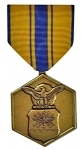
Air Force Commendation Medal:
Criteria: A mid-level award presented for sustained acts of heroism or meritorious service. Awarded by local commanders, allowing for a broad interpretation of the criteria for which the medal may be awarded. For actions where such performance was in direct contact with an enemy force, the Valor device ("V" device) is authorized as an attachment to the decoration. The U.S. Air Force began issuing its own Commendation Medal in 1958 with additional awards denoted by oak leaf clusters.
This Service Medal is awarded for meritorious service in an Aircraft by the following methods:
- Successfully landing five (5) or more kills in a fighter/bomber killing enemy ground vehicles.(Kills witnessed by Group Member or Screenshot)
- For the total destruction of all hangers on an Airfield while participating in an engagement to capture the Base. (The Base must be captured and Recommended by a Group Member that witnessed the engagement.)
- For the capture of a Base using a C-47 while under heavy attack by the enemy.(Recommended by a Group Member that witnessed the engagement)
- For having 10 or more kills in an Aircraft even if you get killed.(Screenshot)
- Additional bestowals of this medal are denoted by service stars.

Navy & Marine Corps Commendation Medal
Criteria: A mid-level award presented for sustained acts of heroism or meritorious service. Awarded by local commanders, allowing for a broad interpretation of the criteria for which the medal may be awarded. For actions where such performance was in direct contact with an enemy force, the Valor device ("V" device) is authorized as an attachment to the decoration. The Navy and Marine Corps Commendation Medal, in contrast to the other services, is considered a somewhat-high decoration reserved for Department level officers, senior CPOs, and as a retirement award. U.S. Marines have always been issued the Navy Commendation Medal and there is not a separate Commendation Medal intended only for Marines. Additional awards are denoted by service stars.
This Service Medal is awarded for meritorious service in the following methods:
- For the successful landing of 10 kills in a Field Gun or Gun Battery.(Witnessed by a Group Member)
- For the Solo capture of a Base with an LVTA-2(Witnessed by a Group Member)
- For exceptional meritorious service in a Gun Battery while engaged with the enemy.( Recommended by a Group Member that witnessed the engagement)
- Additional bestowals of this medal are denoted by service stars.

Air Force Good Conduct Medal:
Criteria: Awarded to any enlisted member of the United States military (except U.S. Air Force personnel after 2006) who completes three consecutive years of "honorable and faithful service." Such service implies that a standard enlistment was completed without any non-judicial punishments, disciplinary infractions, or court martial offenses. If a service member commits an offense, the three-year mark "resets" and a service member must perform an additional three years of discipline free service before the Good Conduct may be authorized. The Air Force Good Conduct Medal which was authorized by Congress on July 6, 1960, but not created until June 1, 1963. Between 1947 and 1963, Air Force personnel were issued the Army Good Conduct Medal. For those serving both before and after 1963, both the Army and Air Force Good Conduct Medals could be worn simultaneously on an Air Force uniform. The 97th Air Force Uniform Board met in October 2005 and made the decision to discontinue the medal with the rationale that good conduct of Airmen is the expected standard, not an exceptional occurrence worthy of recognition. On 8 February 2006, the Board announced that effective immediately new medals will no longer be issued, but previously awarded medals that are a matter of record may still be worn. Additional decorations of the Air Force Good Conduct Medal are denoted by oak leaf clusters.
AIR FORCE GOOD CONDUCT MEDAL: This medal is awarded for the continued quick responses to the Call of Arms, ("Rallying"), and for readily volunteering your services to do what is needed. This medal may be recommended by a Commanding Officer.
Additional bestowals of this medal are denoted by service stars.
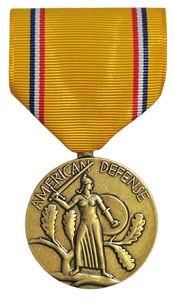
American Defense Medal (Base Defense Medal) - WW II
Criteria: Army: Authorized to any military member who performed duty between September 8, 1939 and December 6, 1941. Members of the United States Army were required to perform at least one year of duty, during the above time period, while United States Navy, U.S. Coast Guard, and United States Marine Corps personnel were awarded the medal for any length of service during the eligible time frame.
This Service Medal is awarded for the meritorious involvement in the defense of a base against adverse conditions with the enemy. The base must not be taken and a Command Staff Officer must be witness to the Action. A Squad Commander of another squad may recommend you for this Medal.
Additional bestowals of this award are denoted by service stars.
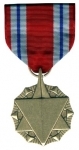
Combat Readiness Medal:
Criteria: The current Combat Readiness Medal is awarded to any member of U.S. Air Force, or Air Force Reserve, who have accomplished sustained individual combat mission readiness or who have undertaken the preparedness for direct weapon-system employment. A service member must have completed 24 cumulative months of sustained duty performance for the medal to be received. The Combat Readiness Medal is awarded as a service decoration by an Air Force Major Headquarters. In many cases, those receiving the award have also qualified for the Air Medal or the Aerial Achievement Medal. It is not uncommon for service members to receive two - or all three - of the medals simultaneously. The original Combat Readiness Medal was an award senior to the Air Force Commendation Medal and was awarded for superior and meritorious duty to the United States Air Force. The award criteria for the medal was changed in 1967 and the Combat Readiness Medal adopted the designation as a campaign service award. Multiple awards of the Combat Readiness Medal are authorized, with additional decorations denoted by oak leaf clusters.
This Service Medal is awarded for quick actions and readiness against the enemy. Also given for the quick actions for obeying orders as given by your superior officer. A command grade officer must recommend you for this Medal.
Additional bestowals of this award are denoted by service stars.

Bronze Star Medal
Criteria: A U.S. Armed Forces individual military decoration and the fourth-highest award for bravery, heroism or meritorious service. Awarded to a member of the military who, while serving in or with the military of the United States after December 6, 1941, distinguished him or herself by heroic or meritorious achievement or service, not involving participation in aerial flight, while engaged in an action against an enemy of the United States; while engaged in military operations involving conflict with an opposing foreign force; or while serving with friendly foreign forces engaged in an armed conflict against an opposing armed force in which the United States is not a belligerent party. Awards may be made for acts of heroism, performed under circumstances described above, which are of lesser degree than required for the award of the Silver Star. Awards may also be made to recognize single acts of merit or meritorious service. The required achievement or service while of lesser degree than that required for the award of the Legion of Merit must nevertheless have been meritorious and accomplished with distinction. To be eligible for the Bronze Star Medal, a military member must be getting hostile fire/imminent danger pay, during the event for which the medal is to be awarded. The Bronze Star Medal is typically referred to by its full name (including the word "Medal") to differentiate the decoration from bronze service stars.
This Achievement Medal is awarded for the successful landing of 5 kills in a fighter while dogfighting in a single sortie. This medal is also awarded for the successful landing of 7 kills in a ground vehicle in a single sortie. A squad member must be witness to the kills landed. If in such a case where you are online by yourself, a Squad Commander of another squad may act as witness to the kills landed or you may take a screenshot.
Additional bestowals of this award are denoted by service stars.
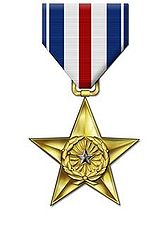
Silver Star Medal
Criteria: Awarded for gallantry in action against an enemy of the United States not justifying a higher award. It may be awarded to any person who, while serving in any capacity with the U.S Armed Forces, distinguishes him or herself by extraordinary heroism involving one of the following actions: in action against an enemy of the United States; while engaged in military operations involving conflict with an opposing foreign force; while serving with friendly foreign forces engaged in an armed conflict against an opposing armed force in which the United States is not a belligerent party. The required gallantry, while of a lesser degree than that required for award of the Distinguished Service Cross, Navy Cross or Air Force Cross, must nevertheless have been performed with marked distinction. Soldiers who received a citation for gallantry in action during World War I may apply to have the citation converted to the Silver Star Medal. The Silver Star Medal is the third highest military decoration that can be awarded to a member of the United States Armed Forces.
This Achievement Medal is awarded for the successful landing of 10 kills in a single sortie while dogfighting in a fighter. This medal is also awarded for the successful landing of 15 kills in a ground vehicle in a single sortie. A squad member must be witness to the kills landed. If in such a case where you are online by yourself, a Squad Commander of another Squad may act as witness to the kills landed or you may take a screenshot.
Additional bestowals of this award are denoted by service stars.
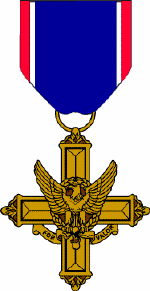
Army Distinguished Service Cross Medal:
Criteria: A U.S. Army decoration awarded for extreme gallantry and risk of life in actual combat with an armed enemy force. Actions which merit the Distinguished Service Cross must be of such a high degree to be above those required for all other U.S. combat decorations but not meeting the criteria for the Medal of Honor. The Distinguished Service Cross is equivalent to the Navy Cross (Navy and Marine Corps) and the Air Force Cross (Air Force). The Distinguished Service Cross was first awarded during World War I. In addition, a number of awards were made for actions before World War One. In many cases, these were to soldiers who had received a Certificate of Merit for gallantry which, at the time, was the only other honor besides the Medal of Honor the Army could award. Others were belated recognition of actions in the Philippines, on the Mexican Border and during the Boxer Rebellion. This decoration should not be confused with the Distinguished Service Medal, which recognizes meritorious service to the government of the United States (as a senior military officer or government official) rather than individual acts of bravery (as a member of the United States Army).
This Achievement Medal is awarded to a member with a RANK/SCORE of less than 100 in the VEHICLE catagory at the end of the Tour.
Additional bestowals of this award are denoted by service stars.
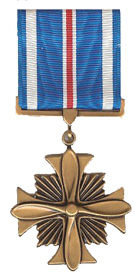
Distinguished Flying Cross Medal
Criteria: Awarded to any officer or enlisted member of the United States armed forces who distinguishes himself or herself in combat in support of operations by "heroism or extraordinary achievement while participating in an aerial flight, subsequent to November 11, 1918." The decoration may also be given for an act performed prior to that date when the individual has been recommended for, but has not received the Medal of Honor, Distinguished Service Cross, Navy Cross, or Distinguished Service Medal. During wartime, members of the Armed Forces of friendly foreign nations serving with the United States are eligible for the award. It is also given to those who display heroism while working as instructors or students at flying schools.
This Achievement Medal is awarded for having a RANK/SCORE of less than 100 in the FIGHTER/BOMBER/ATTACK Catagory at the end of the Tour.
Additional bestowals of this award are denoted by service stars.

Joint Service Commendation Medal
Criteria: Awarded for heroism or meritorious service while assigned to a joint command or joint activity. Generally considered to be a somewhat high-ranking decoration. As such, it is worn above the service Commendation Medals on a military uniform. For actions where such performance was in direct contact with an enemy force, the Valor device ("V" device) is authorized as an attachment to the decoration. For additional awards of the Joint Service Commendation Medal, the Army issues oak leaf clusters while the Navy and Coast Guard furnish gold and silver award stars. The Operational Distinguishing Device is authorized for the Coast Guard Commendation Medal upon approval of the awarding authority.
This Achievement Medal is awarded to any member that has a RANK/SCORE of less than 100 in (2) catagories at the end of the Tour.
Additional bestowals of this award are denoted by service stars.

Air Force Cross Medal:
Criteria: The second highest military decoration that can be awarded to a member of the United States Air Force. The Air Force Cross is awarded for extraordinary heroism not justifying the award of the Medal of Honor. It may be awarded to any person who, while serving in any capacity with the U.S Air Force, distinguishes him or herself by extraordinary heroism involving one of the following actions: in action against an enemy of the United States; while engaged in military operations involving conflict with an opposing foreign force; while serving with friendly foreign forces engaged in an armed conflict against an opposing armed force in which the United States is not a belligerent party. Additional awards of the Air Force Cross are annotated by oak leaf clusters, and the reverse of every Air Force Cross is engraved with the recipient's name.
This Achievement Medal is awarded to any member that has a TOTAL RANK/SCORE of less than 100 at the end of the Tour.
Additional bestowals of this award are denoted by service stars.
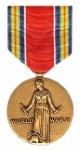
World War II (WWII) Victory Medal
Criteria: Awarded to any member of the United States military who served on active duty, or as a reservist, between December 7, 1941 and December 31, 1946. The World War II Victory Medal was first issued as a ribbon, and was referred to simply as the “Victory Ribbon.” By 1946, a full medal had been established which was referred to as the World War II Victory Medal. There is no minimum service time limit for the issuance of the World War II Victory Medal, and the National Personnel Records Center has reported some cases of service members receiving the award for simply a few days of service. As the Second World War ended in August 1945, there are also cases of service members, who had enlisted in 1946, receiving the decoration without having been a veteran of World War II.
This Achievement/Service Medal will be awarded for the involvement in the winning of a war (map). You must be online and playing at the time of the map reset.
Additional awards are denoted by service stars.

Department of Defense Distinguished Service Medal
Criteria: Presented for exceptionally distinguished performance of duty contributing to national security or defense of the United States. The decoration is awarded only at the highest levels of the military while assigned to a joint activity. It is the United States's highest peacetime defense award. Normally, such responsibilities deserving of the Defense Distinguished Service Medal are held by the most senior officers such as the Chairman and Vice Chairman of the Joint Chiefs of Staff, the Chiefs and Vice Chiefs of the Services, and Commanders and Deputy Commanders of the Unified Commands whose duties bring them into direct contact with the Secretary of Defense and other senior officials. This decoration takes precedence over the Distinguished Service Medals of the separate services and is not to be awarded to any individual for a period of service for which an Army, Navy, Air Force or Coast Guard Distinguished Service Medal is awarded.
This Service Medal may be awarded to senior officers whose direct and individual contributions to the countrys attack strength or defense are recognized as being exceptional in scope and value. This Medal can only be given to higher ranked individuals and must be recommended by (2) two Commanding Officers of two different squads. May also be awarded to the Group Commander for the Group being #1 in base captures at the end of a Tour.
Additional bestowals of this medal are denoted by service stars.

Air Force Distinguished Service Medal:
Criteria: Awarded to any member of the United States Air Force who has distinguished himself or herself by exceptionally meritorious service to the United States Government in a duty of great responsibility. The medal is typically awarded to senior Air Force Generals. The medal was intended as a new decoration of the United States Air Force to replace the policy of awarding the Army Distinguished Service Medal to Air Force personnel. Until 1955, the official title of the new decoration was Distinguished Service Medal (Air Force). After the Korean War, the medal was referred to by its current name.
This Service Medal is awarded to any high ranking member that has proven himself in the Stratigic Planning and Tactics of successful base take missions. This Medal is awarded on a percentage value based on missions that are successful in capture and missions that are scrubbed or aborted. A Letter of Recommendation from (2) members of the Command Staff are required for the bestowal of this medal. A Letter of Recommendation from (2) Squad Commanders may be accepted for the bestowal of this medal.
Additional bestowals of this medal are denoted by service stars.
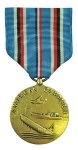
American Campaign Medal (Group Service Medal)- WW II
Criteria: Awarded to service members performing either one year of consecutive duty between December 7, 1941 to March 2, 1946 within the continental borders of the United States, or performing 30 days consecutive or 60 non-consecutive days of duty outside the borders of the United States but within the American Theater of Operations. The American Theater was defined as the entirety of the United States to include most of the Atlantic Ocean, a portion of Alaska, and a small portion of the Pacific bordering California and Baja California. Service stars were authorized to any service member who was engaged in actual combat with Axis forces within the American theater. This primarily applied to those members of the military which had engaged in anti-U-Boat patrols in the Atlantic.
This medal is awarded for meritorious service of at least one year as a *V*DEVILS REJECTS*V* Member.
 AIR FORCE RECOGNITION RIBBON
This Ribbon is awarded in recognition of any outstanding Achievement or Service that does not warrant the awarding of a medal. This Ribbon will be awarded by the Group Commander at his discretion.
Additional bestowals of this Ribbon are denoted by an oak leaf cluster.
 NAVY DISTINGUISHED SERVICE RIBBON
This Ribbon is awarded in recognition of any outstanding Achievement or Service that does not warrant the awarding of a medal. This Ribbon will be awarded by the Group Commander at his descretion.
Additional bestowals of this Ribbon are denoted by an oak leaf cluster.
 AIR FORCE UNIT COMMENDATION RIBBON
This Ribbon is awarded to a Squadron, Flight, or Unit for outstanding Achievement or Service. This Ribbon will be awarded at the discretion of the Group Commander.
Additional bestowals of this Ribbon are denoted by an oak leaf cluster.
 PRESIDENTIAL UNIT CITATION RIBBON
This Citation is awarded for exceptional meritorious service in regards to your Group, Squadron or Unit. This citation is awarded for scores earned during a Tour and for exceptional meritorious service working as a Team. The awarding of this citation rests solely at the discretion of the Group Commander.
Additional bestowals of this ribbon are cenoted by an oak leaf cluster.
Bronze Service Star
Criteria: A service star, also referred to as a battle star, campaign star, or engagement star, is an attachment to a military decoration which denotes participation in military campaigns or multiple bestowals of the same award. Service stars are typically issued for campaign medals, service medals, ribbon awards, and certain military badges. Service stars are different from award stars, which are issued for multiple awards of meritorious and combat decorations. The United States military issues bronze and silver and gold service stars, with a bronze service star issued “in lieu” of each bestowal of the same award.

Silver Service Star
Criteria: A service star, also referred to as a battle star, campaign star, or engagement star, is an attachment to a military decoration which denotes participation in military campaigns or multiple bestowals of the same award. Service stars are typically issued for campaign medals, service medals, ribbon awards, and certain military badges. Service stars are different from award stars, which are issued for multiple awards of meritorious and combat decorations. The United States military issues bronze and silver and gold service stars, with a silver service star issued “in lieu” of five bronze.

Gold Service Star
Criteria: A service star, also referred to as a battle star, campaign star, or engagement star, is an attachment to a military decoration which denotes participation in military campaigns or multiple bestowals of the same award. Service stars are typically issued for campaign medals, service medals, ribbon awards, and certain military badges. Service stars are different from award stars, which are issued for multiple awards of meritorious and combat decorations. The United States military issues bronze and silver and gold service stars, with a gold service star issued “in lieu” of five silver.
 Oak Leaf Cluster
Criteria: Bronze and Silver Oak Leaf Clusters are common devices placed on many United States military awards and decorations signifying multiple bestowals of a particular award. The number of oak leaf clusters indicates the second and subsequent awards of the decoration. One single oak leaf cluster, for example, is attached to the designated award and denotes a second award of that particular decoration. Service members do not wear more than one service ribbon on their ribbon rack even when they have received the award more than once. Instead, multiple awards are shown by attaching the oak leaves to the ribbon. One single oak leaf denotes the second award of that particular decoration. Two oak leaves denotes three awards. Four denote five awards. When the sixth award of a specific decoration is bestowed on the individual, a single “silver” bronze oak leaf is placed on the ribbon (as opposed to five bronze oak leaves). Oak leaves are most commonly employed by the U.S. Army and U.S. Air Force to denote multiple awards. The U.S. Navy, Marine Corps and Coast Guard typically employ Gold and Silver Stars to signify multiple awards. Specific use of these devices, however, vary between services.
 Silver Oak Leaf Cluster
Criteria: Bronze and Silver Oak Leaf Clusters are common devices placed on many United States military awards and decorations signifying multiple bestowals of a particular award. The number of oak leaf clusters indicates the second and subsequent awards of the decoration. One single oak leaf cluster, for example, is attached to the designated award and denotes a second award of that particular decoration. Service members do not wear more than one service ribbon on their ribbon rack even when they have received the award more than once. Instead, multiple awards are shown by attaching the oak leaves to the ribbon. One single oak leaf denotes the second award of that particular decoration. Two oak leaves denotes three awards. Four denote five awards. When the sixth award of a specific decoration is bestowed on the individual, a single “silver” bronze oak leaf is placed on the ribbon (as opposed to five bronze oak leaves). Oak leaves are most commonly employed by the U.S. Army and U.S. Air Force to denote multiple awards. The U.S. Navy, Marine Corps and Coast Guard typically employ Gold and Silver Stars to signify multiple awards. Specific use of these devices, however, vary between services.
